
How to Search Middlesex County Court Records
The official statewide tool is MassCourts eAccess, run by the Massachusetts Trial Court at no cost to the public. It is not a single Middlesex database. Think of it as a department-and-division system. You pick a court department first, then narrow down to the local Middlesex division, then enter a party name or docket number. Public web access shows real case data, but it is narrower than what a clerk can display at the counter. Some filings are viewable online; others require an in-person or written request.
Have a few things ready before you start. A correctly spelled full name helps. A docket number helps more. For very common surnames, a filing date range or a case type cuts noise. Knowing whether the matter is criminal, civil, family, or probate saves several wrong turns.
- Open MassCourts eAccess and choose your search route: name search when you do not know the docket number, docket-number search when you have the citation or complaint number, or calendar search for upcoming hearing dates.
- Select the Trial Court department. Felony indictments and large civil suits belong in Superior Court. Misdemeanors, small claims, traffic citations, and restraining orders go in District Court. Divorce, custody, estates, and guardianship go in Probate and Family Court. Evictions may be in Housing Court depending on the city or town.
- Select the Middlesex division. The county has many divisions, and choosing the wrong one can hide a real case entirely. If you know the city or town where the event happened, match it to the correct court using the division list below.
- Enter the last name and first name, or the full docket number. For common names, add a filing date range or case type to narrow the results. Enter docket numbers exactly, including letters, hyphens, and year prefixes if shown on paperwork.
- Read each result row carefully: docket number, court, party role, case caption, case type, filing date, and status. Open the case detail where the system allows it.
- If you need official proof, ask the clerk whether a certified or attested copy is required. A printout from the portal is not the same as a certified copy for court, immigration, licensing, or employment use.
- If the search returns nothing, try a neighboring division, check spelling variations, or call the clerk directly before concluding no record exists.
The Massachusetts District Court locations page lists every division, the cities and towns each one serves, and the physical address. Matching your town to the right division before you search is the single best way to avoid a failed result.
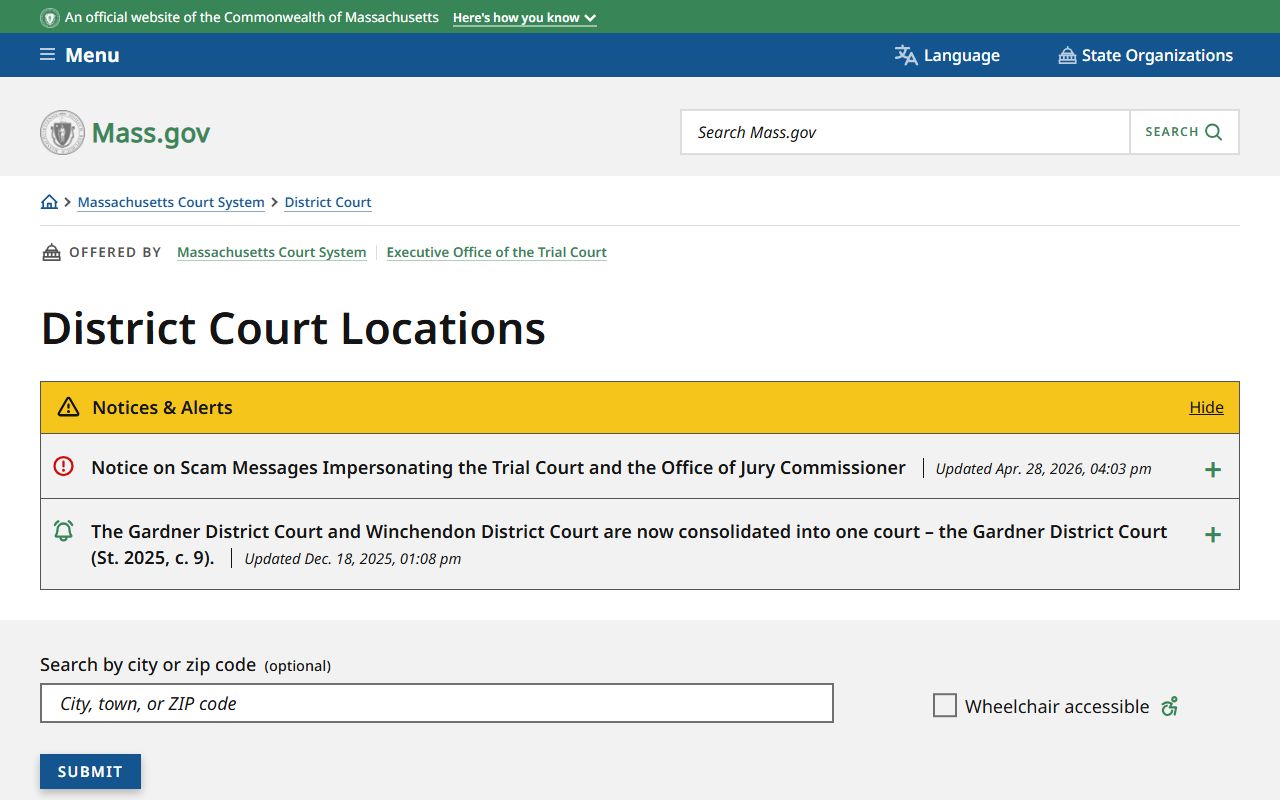
That divisions list makes clear why a Lowell citation may be at Lowell District Court while a Newton matter sits across town at Newton District Court, even though both fall under Middlesex County.
Middlesex County Court Records Search Fields
MassCourts eAccess presents several fields depending on the search tab selected. The table below describes what each field does and how to fill it in for a Middlesex search. Not every field appears on every tab, and some fields become required only after you pick a department or division.
| Field Label | Type | Required | Notes / Format |
|---|---|---|---|
| Search Type / Tab | Tab or radio button | Yes | Common public options include name search, case/docket number search, calendar/event search, and attorney search where enabled. |
| Court Department | Dropdown | Yes | Select Superior Court, District Court, Probate and Family Court, Housing Court, or Land Court. Juvenile Court access is restricted. |
| Court Division | Dropdown | Often required after department | Middlesex divisions include Woburn and Lowell Superior; Ayer, Cambridge, Concord, Framingham, Lowell, Malden, Marlborough, Natick, Newton, Somerville, Waltham, and Woburn District; and Middlesex Probate and Family locations. |
| Case Type | Dropdown | Optional | Civil, criminal, small claims, summary process, probate, family, equity, tort, contract, abuse prevention, and other department-specific categories. |
| First Name | Text | Optional | Use the spelling on the court document where possible. |
| Last Name / Business Name | Text | Usually required for name search | Last name is the key field for individuals. Businesses may need the exact legal name. |
| Date of Birth | Date | Optional / limited | Criminal searches may not expose DOB through remote access. Use only where the portal allows it. |
| Case / Docket Number | Text | Required for docket search | Format varies by court and department. Include the department prefix if known. |
| Filing Date From / To | Date range | Optional | Very useful for common names. Enter both a start and end date to narrow results. |
| Case Status | Dropdown | Optional | Open/pending, disposed/closed, inactive, stayed, transferred, or sealed if shown. |
| Party Type | Dropdown | Optional | Plaintiff, defendant, petitioner, respondent, appellant, appellee, or interested party. |
| Search / Reset buttons | Buttons | Search is required | Search runs the query. Reset clears all fields. New Search returns to the form from a results page. |
Note: Public search is free, but web access is narrower than clerk-counter access. The Massachusetts Trial Court Rules on Public Access to Court Records explain what is available online versus what requires an in-person visit or a court order.
Types of Middlesex County Court Records
Middlesex records span several departments and cover a wide range of case types. Criminal and civil files come from Superior and District Court. Family and estate files come from Probate and Family Court. Housing and land matters have their own specialized departments. Most adult dockets are public unless sealed or impounded, but a few whole categories are closed to the general public by statute or court rule.
The same person can have files in more than one department. A felony case may start in a District Court division for arraignment, then move to Superior Court after grand-jury action. A divorce can run alongside a probate estate for the same family at the same time. Knowing where each type lands saves you from searching the wrong department and concluding no record exists.
- Civil Superior Court records – complaints, answers, motions, memoranda, discovery disputes, orders, judgments, notices of appeal, and execution. Generally public unless impounded or containing restricted material.
- District civil records – small claims, civil money claims within the court's limit, summary process where Housing Court does not control, supplementary process, and civil motor-vehicle infractions.
- Criminal records – complaints, indictments, arraignment entries, bail orders, plea and disposition records, sentencing, probation, warrants, and revocation entries. CORI rules affect remote display and dissemination.
- Family records – divorce, custody, child support, paternity, modification, contempt, separate support, and abuse prevention in Probate and Family Court. Some documents within these cases are restricted even when the docket is public.
- Probate records – wills, petitions, decrees, appointments, inventories, accounts, bonds, and guardianship and conservatorship pleadings. Some medical and financial details may be restricted. See Probate & Family Court records for details.
- Traffic records – criminal citations, civil motor-vehicle infractions, and OUI/criminal motor-vehicle cases. RMV driver records are a separate file held by the state. See traffic court records for citation-specific steps.
- Juvenile records – delinquency, youthful offender, care and protection, and adoption-related matters. Access is substantially limited by statute and court rule.
Protective orders, mental-health proceedings, and Land Court registered-land matters round out the picture. For Middlesex court dockets specifically, including how to read a docket entry and what each notation means, the court dockets page goes deeper.
What Middlesex County Court Records Show
A typical Middlesex court record holds the docket number, the caption, the department and division, the filing date, party names and roles, attorney appearances, the event log, hearing dates, orders, and the final disposition. Criminal dockets add charge text, bail decisions, plea entries, sentence, probation terms, restitution, fines, and any warrant activity. Civil dockets add service, answer, counterclaim, motion practice, discovery orders, trial assignment, judgment, execution, satisfaction, and appeal notice. Personal identifiers such as Social Security numbers and financial account numbers are redacted in public-facing results.
| Field | What It Shows |
|---|---|
| Case Number / Docket Number | Department-specific format, often a year plus a department or division code plus a sequence number. |
| Case Name / Caption | Plaintiff v. defendant, Commonwealth v. defendant, petitioner/respondent, estate name, or domestic-relations caption. |
| Court | Department and division, for example Middlesex Superior Court or Lowell District Court. |
| Case Type | Civil action, criminal, small claims, summary process, divorce, probate, equity, abuse prevention, or guardianship. |
| Filing Date | Date the case was filed or the complaint was issued. |
| Status / Disposition | Open, active, closed, disposed, dismissed, judgment, transferred, or impounded/sealed where shown. |
| Parties | Names and roles; personal identifying data is redacted in the public view. |
| Attorneys | Counsel names and bar numbers may appear depending on the view level. |
| Docket Entries | Chronological event log: complaint filed, summons issued, motions, hearings, orders, judgments, warrants, defaults, continuances. |
| Events / Hearings | Date, time, session or courtroom, event type, and judge or session where public. |
| Documents | Not all pleadings are downloadable through public eAccess; a clerk copy may be required for the full file. |
| Redactions | Social Security numbers, financial account numbers, minor names, victim or witness identifiers, medical information, and impounded materials are restricted. |
Public results typically show docket entries and scheduled events. The actual pleadings, exhibits, and audio recordings usually stay off the web and require a copy request at the clerk's office for that department.
Public Access Laws for Middlesex County Court Records
Massachusetts public access works in three distinct layers, and mixing them up leads to confusion. The first layer covers ordinary government records: municipal police departments, the Sheriff's Office, the District Attorney's administrative files, state agencies, city and town clerks, and the Registry of Motor Vehicles. These fall under the Massachusetts Public Records Law, principally M.G.L. c.4, Section 7(26), which defines what is a public record and lists the statutory exemptions. Privacy, investigatory, personnel, trade secret, and public-safety exemptions can all apply, which is why a police report may be released with redactions or withheld in full even when the related court docket is open.
The second layer covers court case records. Case files are held by the Judicial Branch and governed by Trial Court rules, common-law access principles, statutes, and impoundment orders. The Massachusetts Trial Court Rules on Public Access to Court Records are the controlling authority for what MassCourts can show and what stays behind the counter. A docket may be public while a document inside that docket is impounded. A document may be available at the courthouse but not online. Parties and attorneys may have access that the general public does not.
The third layer is criminal history. M.G.L. c.6, Section 172 controls how CORI criminal history is shared. Employers, housing providers, schools, licensing boards, law enforcement, and the subject of the record do not all see the same information. A public court docket can show that a case existed, but a full CORI report is a separate process through the Department of Criminal Justice Information Services. Do not expect MassCourts to give you a complete statewide background check.
The Massachusetts public records definition and exemptions under M.G.L. c.4, Section 7(26) is the right starting point for understanding why some records are open and others are withheld.
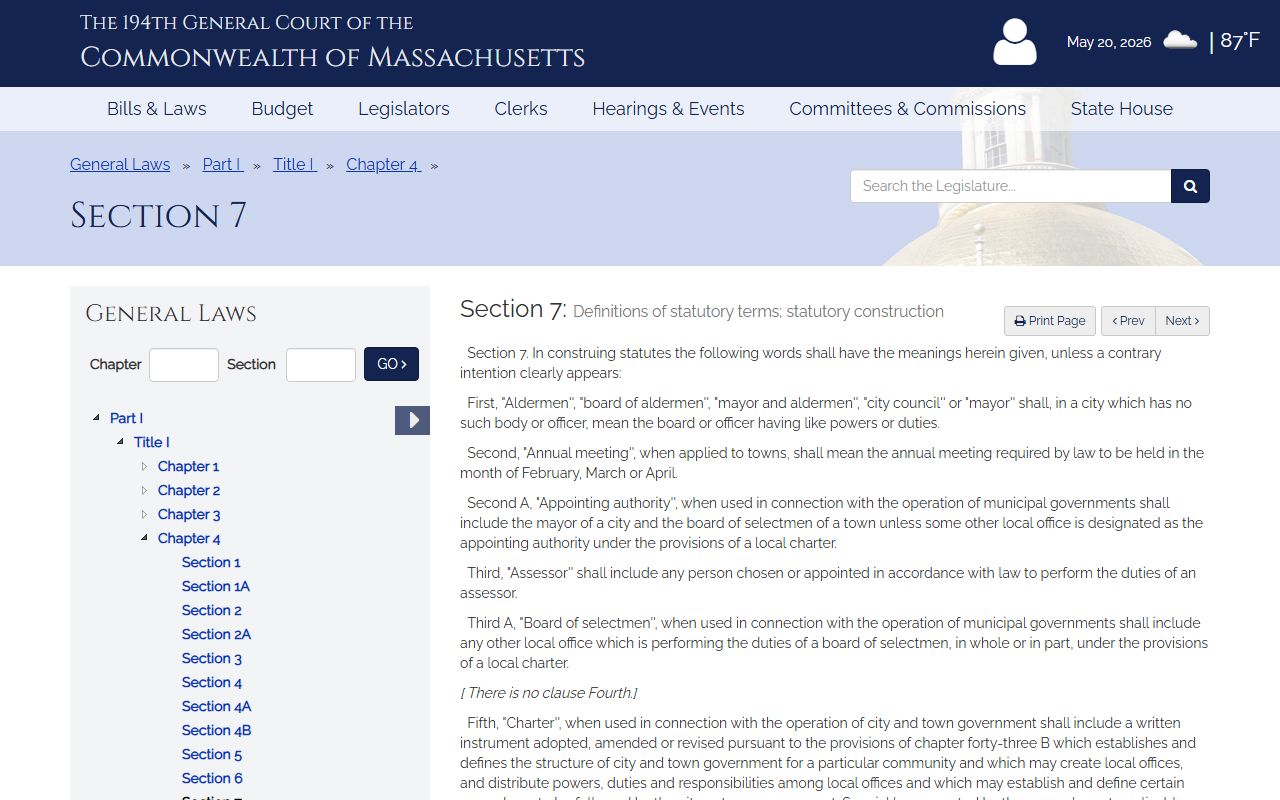
Those exemptions are why a Middlesex sheriff booking record or a DA administrative file can be partially redacted even when the court docket for the same case is fully visible. For the request process and appeal rights under the Public Records Law, see Middlesex County public records.
Key statutes: M.G.L. c.66, Section 10 sets the request procedure and response timelines for public records agencies. M.G.L. c.66, Section 10A allows an administrative appeal to the Supervisor of Records after a denial or inadequate response. These apply to sheriff, DA, police, and municipal records, not to judicial branch case files.
Records That Are Sealed or Restricted in Middlesex
Several categories of Middlesex court records are not open to a general web search, and a few are closed entirely. The list is worth knowing before you assume a blank result means no record exists. Restricted categories include juvenile records, adoption records, impounded filings, sealed criminal records, expunged records, mental-health and commitment records, domestic-violence victim information, child welfare records, financial statements in family cases, medical records submitted to a court, Social Security numbers, financial account numbers, minors' names, grand-jury materials, and search-warrant materials before they are returned and unsealed.
Juvenile delinquency records are handled under Juvenile Court rules and M.G.L. c.119, Section 60A, which sets the juvenile sealing process. Adoption confidentiality is statutory under M.G.L. c.210, Section 5C. Adoption should never be treated as a searchable public probate record.
For adult criminal records, Massachusetts draws a clear line between sealing and expungement. Sealing under M.G.L. c.276, Section 100A restricts public access after the statutory waiting period for certain convictions, but the record still exists for authorized criminal justice and court use. Sealing under M.G.L. c.276, Section 100C applies to dismissals, acquittals, no bills, and no-probable-cause findings. Expungement is narrower still and can result in actual destruction or deletion under strict eligibility rules. A dismissed case is not automatically invisible; a person often needs to file the correct petition and meet the statutory criteria before public access is cut off.
To petition for sealing or expungement, a person generally files through the court that handled the original case or through the Commissioner of Probation, depending on record type and disposition. The rules are technical. Common denial reasons include an ineligible offense, an insufficient waiting period, open criminal matters elsewhere, or filing in the wrong court. Legal help is worth getting because a procedural mistake delays relief.
The Massachusetts Juvenile Court department page explains how juvenile matters are handled and why most juvenile records do not appear in a standard MassCourts public search.
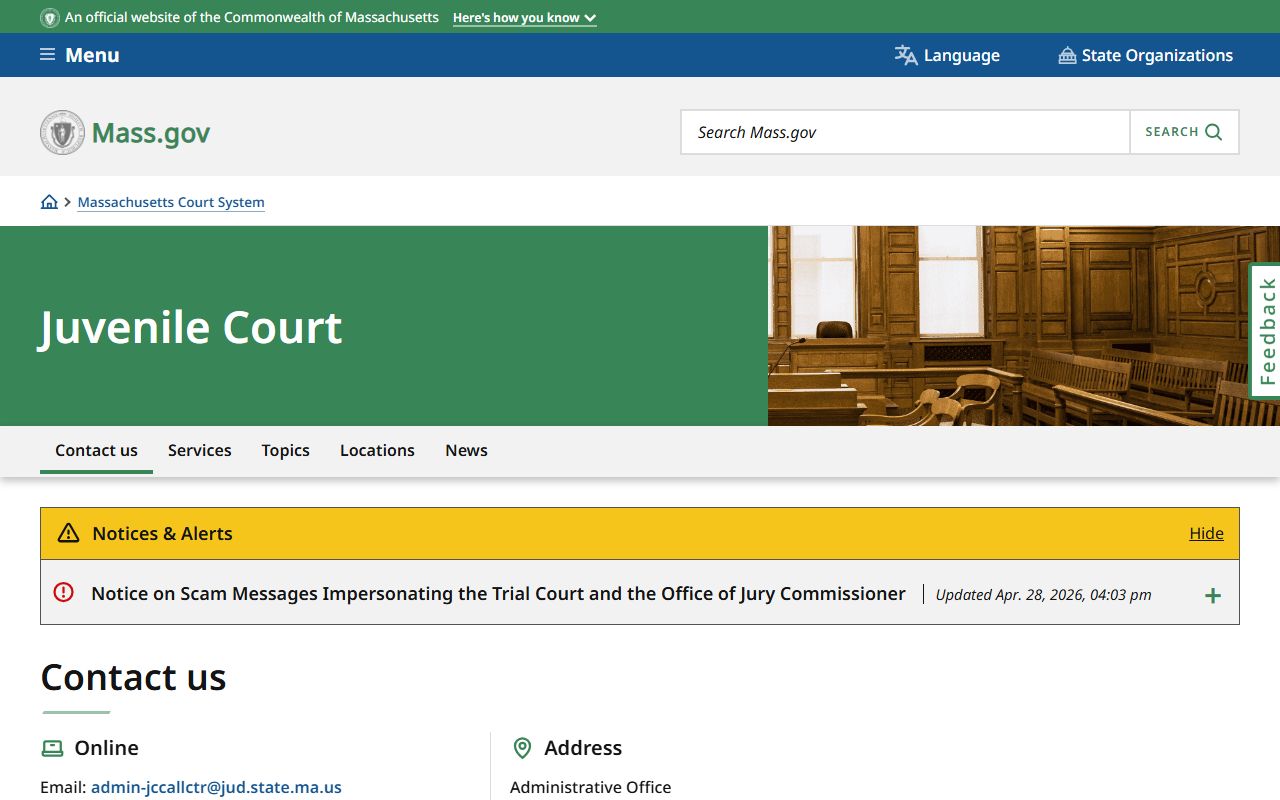
Juvenile and adoption matters represent the strongest access restrictions in the Middlesex system. Do not search for these through the standard public portal and expect results.
Reading a Middlesex County Court Docket
Docket language trips up a lot of readers. The terms below come directly from Massachusetts court practice and appear in Middlesex records. Reading them correctly keeps you from misjudging what a record actually says about a person or a case.
- Commonwealth v.
- Marks a Massachusetts criminal prosecution where the state is the charging party.
- Complaint issued
- A criminal complaint has been issued, not a conviction. The case is just starting.
- CWOF
- Continuance without a finding, a Massachusetts-specific criminal disposition. It is not a guilty finding and not the same as a conviction.
- Nolle prosequi
- The prosecution declined to proceed on a charge. The case ends on that charge.
- Default
- A party failed to appear or respond. In a criminal case it can lead to a warrant.
- Impounded
- Public access is restricted by a rule or court order.
- Judgment nisi
- A preliminary divorce judgment that becomes absolute after the statutory waiting period if no legal barrier arises.
- Rescript
- An appellate court decision or order sent back to the lower court for further action.
- Capias / warrant
- A court order authorizing arrest or custody, often issued after a default.
- Mittimus
- A document committing a person to custody following a sentence or order.
"Dismissed" and "not guilty" are dispositions that may support a sealing petition, but they do not automatically remove a record from every system. A person whose case was dismissed may still need to follow the Section 100C process to restrict public access. For a deeper breakdown of Middlesex County court dockets, including how docket entries flow through a case, the court dockets page covers it in full.
Middlesex County Court Records Search Tips
The most common reason a Middlesex search fails is picking the wrong department or the wrong division, not that the record is missing. Wrong department is the top cause. A divorce will not be found by searching District Court. An estate will not appear in Superior Court. A felony indictment may show early stages in District Court but move to Superior Court after arraignment and grand jury action. A second search in Superior Court is worth the extra two minutes.
Wrong division is the second most common cause. Cambridge District Court and Malden District Court both sit at 4040 Mystic Valley Parkway in Medford, not in Cambridge or Malden. Natick District Court sits in Framingham. A user who searches "Cambridge" and expects a Cambridge street address will look for the wrong courthouse entirely. Confirm the physical address and the division name before searching or visiting.
- Common names need filters. Add a first name, middle initial, filing date range, case type, or docket number to cut down false hits.
- Old cases may be archived. A clerk may need a written request, a fee estimate, and retrieval time for files that are no longer in active storage.
- Sealed or impounded cases may show no result or only a case number with no detail. A blank result does not confirm that no record exists.
- Docket numbers from paperwork should be entered exactly, including any letters, hyphens, and year prefix.
- If a person recently appeared in court, the docket may not update in the public portal right away. Call the clerk for urgent hearing-date confirmation.
Note: If you need a certified copy of a court record for official use, ask the clerk which office holds the file and what the current copy fee and turnaround are before submitting a request.
In-Person Middlesex County Court Record Requests
The public portal is a starting point, not the complete file room. When you need a certified or attested copy, a document that is not downloadable online, a file from an older case, or a copy with a court seal for legal use, you need to contact the clerk for the specific department. Middlesex has separate clerks for Superior Court, each District Court division, and Probate and Family Court. There is no central Middlesex County clerk who holds every file.
Lowell District Court
370 Jackson Street
Lowell, MA 01852
(978) 459-4101
Framingham District Court
600 Concord Street
Framingham, MA 01701
(508) 875-7461
Woburn District Court
30 Pleasant Street
Woburn, MA 01801
(781) 935-4000
Newton District Court
1309 Washington Street
West Newton, MA 02465
(617) 244-3600
Massachusetts does not set one flat county copy fee. Court fees are governed by statewide fee statutes and departmental schedules under M.G.L. c.262, Section 4C. The actual amount depends on the department, copy type, file age, and delivery method. A plain photocopy costs less than a certified or attested copy, which has a court seal and signature. Archived file retrieval may add a separate charge. Always confirm the current fee with the clerk for that department before you mail a check or make a trip. Fee waivers are available through the affidavit of indigency process.